
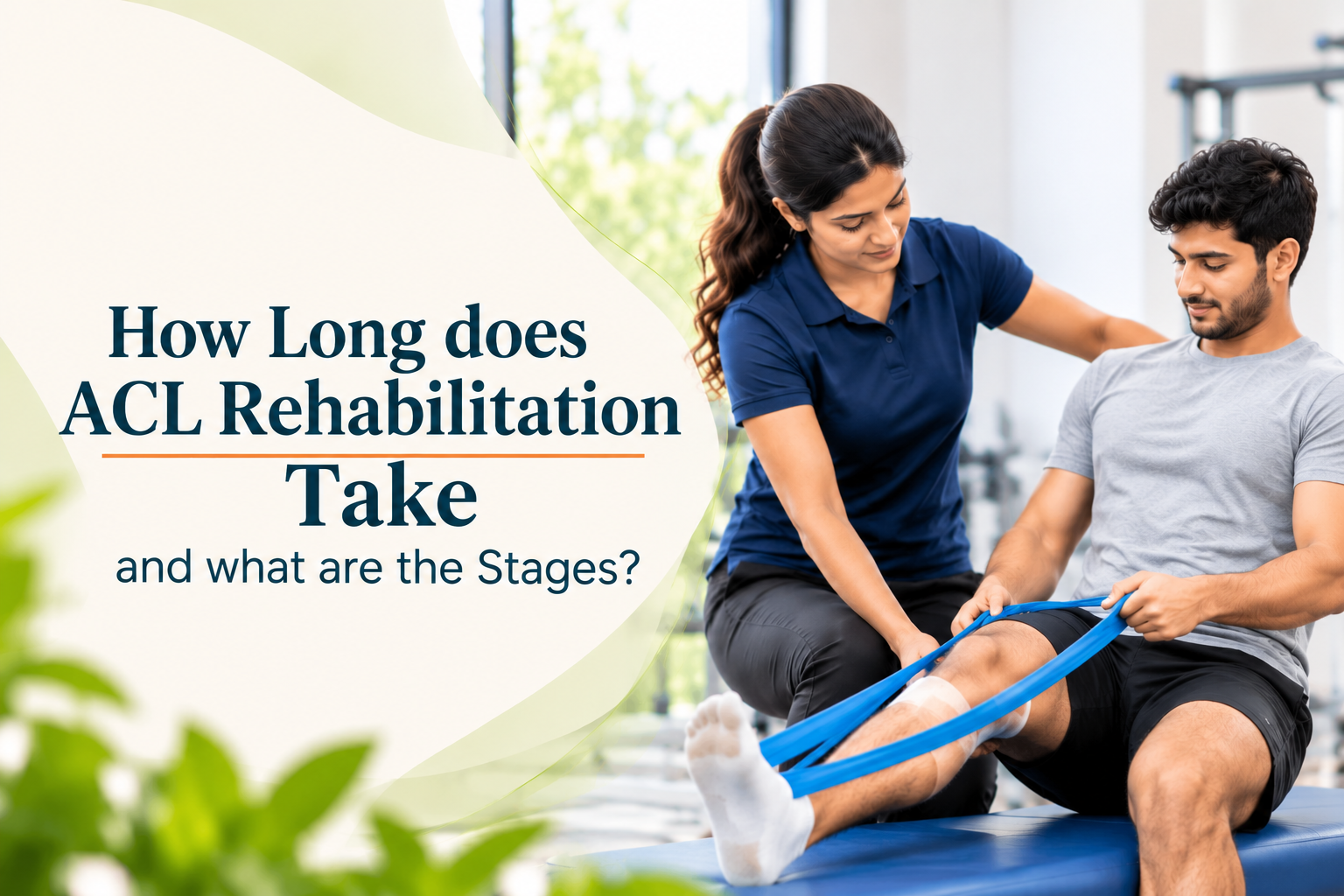
Recovery after ACL reconstruction usually takes 6 to 12 months, although the exact timeline varies from person to person. Rather than following a fixed calendar, rehabilitation progresses through different stages, each with specific recovery goals. Reducing swelling, regaining full knee movement, rebuilding muscle strength and improving balance are important milestones before moving to the next stage. The timeline may also depend on the type of graft used, the surgical technique and whether other knee injuries were treated at the same time.
According to Dr. Kapil Chand Narra, Founder-Director of Jaya Physio Clinics in Hyderabad, “Patients often ask when they can safely return to sports. Rather than focusing on a specific date, I look at their functional recovery. Can they fully straighten the knee, climb stairs without pain, hop on one leg and land with good control? These milestones help us determine when they are ready to return to activity.
Recovering from an ACL tear or surgery? Speak to a specialist and plan your road to recovery.
How long does it take to recover from an ACL injury and what are the stages of ACL rehab?
A few weeks before surgery: Swelling should be reduced, the knee should be able to straighten and bend fully, and the thigh muscles should be reactivated. This provides a better starting point for surgery and recovery.
Protection phase (first 2 weeks): The focus is on controlling pain and swelling, maintaining full knee extension and reactivating the quadriceps muscles. A brace or crutches may be used during this stage.
Movement and walking (weeks 2–6): As the knee begins to recover, bending improves and walking gradually becomes easier. Gentle strengthening exercises and stationary cycling may also be introduced.
Strength building (6 weeks–4 months): With improved movement and walking, the focus shifts to rebuilding strength through leg presses, squats, step-ups, balance work and hip and core exercises. These help strengthen the muscles that stabilise the knee.
Running and agility (approximately 4–6 months): Once sufficient strength and control are achieved, straight-line jogging can begin, followed by jumping, hopping and changing direction.
Return to sport (after 9 months): Before returning to sports, the knee undergoes a series of tests to assess strength and stability. Sport-specific drills are introduced gradually, followed by contact and match practice.
These time frames are general guidelines, not promises. Anyone who needs more time to regain mobility or strength should remain in that stage. A supervised orthopaedic physiotherapy plan helps keep each stage on track.
So, What Decides How Long Your Recovery Will Take?
Type of surgery and graft: The surgical technique and type of graft used influence how much time the knee needs before progressing through rehabilitation.
Other injuries: If the meniscus is repaired or other ligaments are damaged, the initial recovery may take longer and require extra care.
Swelling and early strength: Persistent swelling or weak thigh muscles can slow progress, regardless of how much time has passed since surgery.
Your sport and goals: Walking without pain, jogging and returning to football or cricket involve different levels of recovery. Sports injury physiotherapy helps tailor rehabilitation to each goal.
Confidence: Fear of re-injury can affect movement and confidence. Rehabilitation must rebuild trust in the knee alongside physical strength.
Consistency: Missing physiotherapy sessions or skipping home exercises can delay recovery.
When Is It Safe to Return to Sport?
Most athletes should wait at least nine months after ACL surgery before returning to sports. Research involving young athletes found that those who returned earlier had a much higher risk of injuring the knee again.
Rather than relying on time alone, rehabilitation uses specific tests to assess whether the knee is ready:
- Thigh strength compared with the other leg
- Hop tests performed on one leg
- Landing and changing direction without the knee giving way
- Confidence in the knee during physical activity
The sports injury physio programme at the clinic focuses on ACL recovery and return to sport. Orthopaedic physiotherapy supports post-surgical rehabilitation, while the Trans-Form PRO fitness centre helps with strength and conditioning once the basics are restored.
Frequently Asked Questions
What is the healing process for ACL?
The typical period of time is six to twelve months. Rehabilitation lasts 9 months or more, for return to sport.
When will I be able to walk without crutches?
Within a couple of weeks, after being able to straighten the knee and control the leg. It’s determined by your surgeon and physio.
At what time should I begin to run again?
Typically takes four to six months, but depends upon meeting strength and control tests first.
If I am not having surgery do I need physiotherapy?
Often yes. A few have an ACL tear that can recover without surgery through a structured physiotherapy programme
REFERENCE:
- NHS – Recovering from ACL Surgery
Covers recovery duration, physiotherapy, exercises and return to sports.
https://www.nhs.uk/tests-and-treatments/acl-anterior-cruciate-ligament-surgery/recovering/
- World Health Organization (WHO) – Rehabilitation
Covers rehabilitation after injuries and surgery, including physical exercises, recovery goals and individualised rehabilitation programmes.
https://www.who.int/news-room/questions-and-answers/item/rehabilitation
Disclaimer: This information is for educational purposes only. Consult a healthcare professional for proper advice and treatment.
