
From urinary incontinence to diastasis recti, there is growing evidence that physiotherapy can alleviate pain, and in many cases, it can cure these conditions. At Jaya Physio Clinics, we have several skilled female physiotherapists, who have been specifically trained in Gynecological Physiotherapy.
Women’s Health Physiotherapy
Women’s Health Physiotherapy
Expert physiotherapy to restore function, relieve pain, and support for women through every stage of life. Pregnancy & Pelvic Care Experts
Who Can Benefit?
Planning for pregnancy
Pregnant women
Post-delivery new mothers
Post-menopausal women
From diastasis recti to urinary incontinence, physiotherapy can alleviate pain — and in many cases, cure these conditions. At Jaya Physio Clinics, we have specially trained female physiotherapists in Gynecological Physiotherapy.
Common Conditions Treated
- Diastasis recti
- Endometriosis (symptom management)
- Osteoporosis in women
- Pelvic pain
- Pre- & post-delivery fitness
- Pain during intercourse
- Urinary incontinence (urine leakage)
We treat many other women’s health issues — call for confidential advice at 99635 37999.
DIASTASIS RECTI, EXERCISE DURING PREGNANCY
Women’s Health/Gynecological Physiotherapy/Pelvic Floor Physiotherapy
We treat multiple conditions related to women’s health, including:
- Urinary Incontinence (Scroll to )
- Pelvic Floor Physiotherapy (Scroll to )
- Pelvic Pain Physiotherapy (Scroll to )
- Prenatal Physiotherapy (physiotherapy during pregnancy) (Scroll to )
- Postnatal Physiotherapy (physiotherapy after childbirth) (Scroll to )
- Diastasis Recti and Exercise after Childbirth (Scroll to )
Urinary Incontinence
Incontinence is the involuntary leaking of urine, occurring in roughly 6 out of 10 women. While some experience it during coughing, sneezing, laughing, and/or exercise, others report it as an “urgency,” or even, incomplete urination.
Pelvic Floor Physiotherapy
In females, the “pelvic floor” muscles support the pelvic organs, which form the birth canal and also the passages for urine and faeces (see image below):
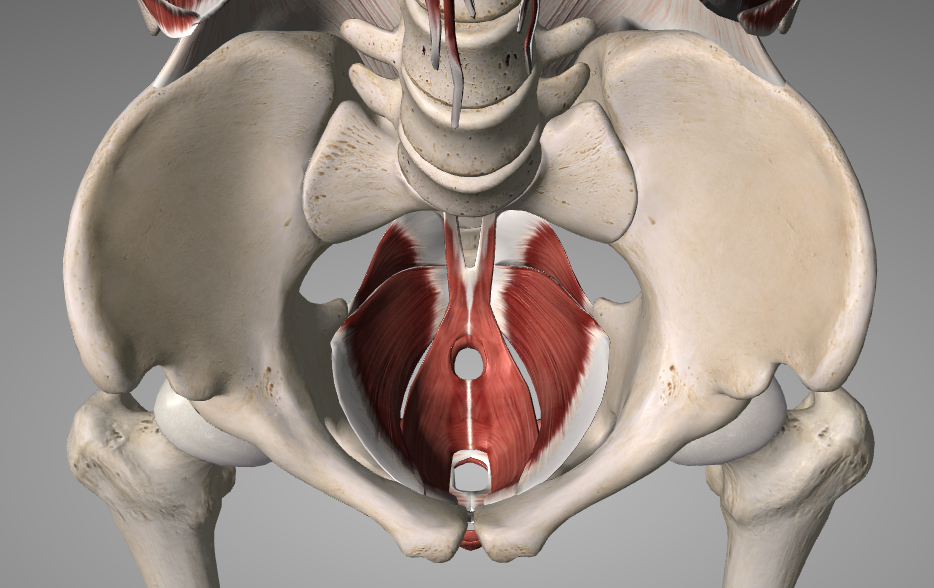
The Female Pelvic Floor Muscles
Img Source: The Injury Clinic
These muscles need to contract effectively to hold the urine, but they must also relax enough to allow for urination, bowel movements, sexual intercourse and childbirth.
Pelvic floor physiotherapy helps in the rehabilitation of the pelvic floor muscles by using techniques like electrical stimulation of the pelvic floor, biofeedback, strengthening and relaxation of the pelvic floor muscles and vaginal weight training.
Pelvic Pain Physiotherapy
“Hypertonia” is too much muscle tone, such that the muscles become stiff and difficult to move.
When the pelvic floor muscles become hypertonic, they can cause pelvic pain, urinary frequency, urgency, incomplete emptying and painful urination. One may also experience pelvic pain as constipation or an unexplained pain in the lower back, pelvic region or genital area during/after intercourse.
Following an assessment, the treatment of a hypertonic pelvis would include:
- Internal manual therapy techniques to relax the pelvic floor muscles, including trigger-point release, myofascial stretches
- Myofascial release of the connective tissue of the abdomen, hips and pelvis, which support the pelvic floor
- Relaxation and breathing techniques
- Advice on toileting and positional modifications
- Provision of vaginal dilators, pelvic floor educators to assist in the release and relaxation of pelvic muscles
- Assessment and treatment of any unresolved low back, hip or pelvic pain
Physiotherapy During Pregnancy/Prenatal Physiotherapy/Antenatal Physiotherapy
It is strongly recommended that you start strengthening your core muscles even BEFORE you become pregnant! This would ease back pain during the pregnancy, help with post-pregnancy recovery and also ease breast-feeding.
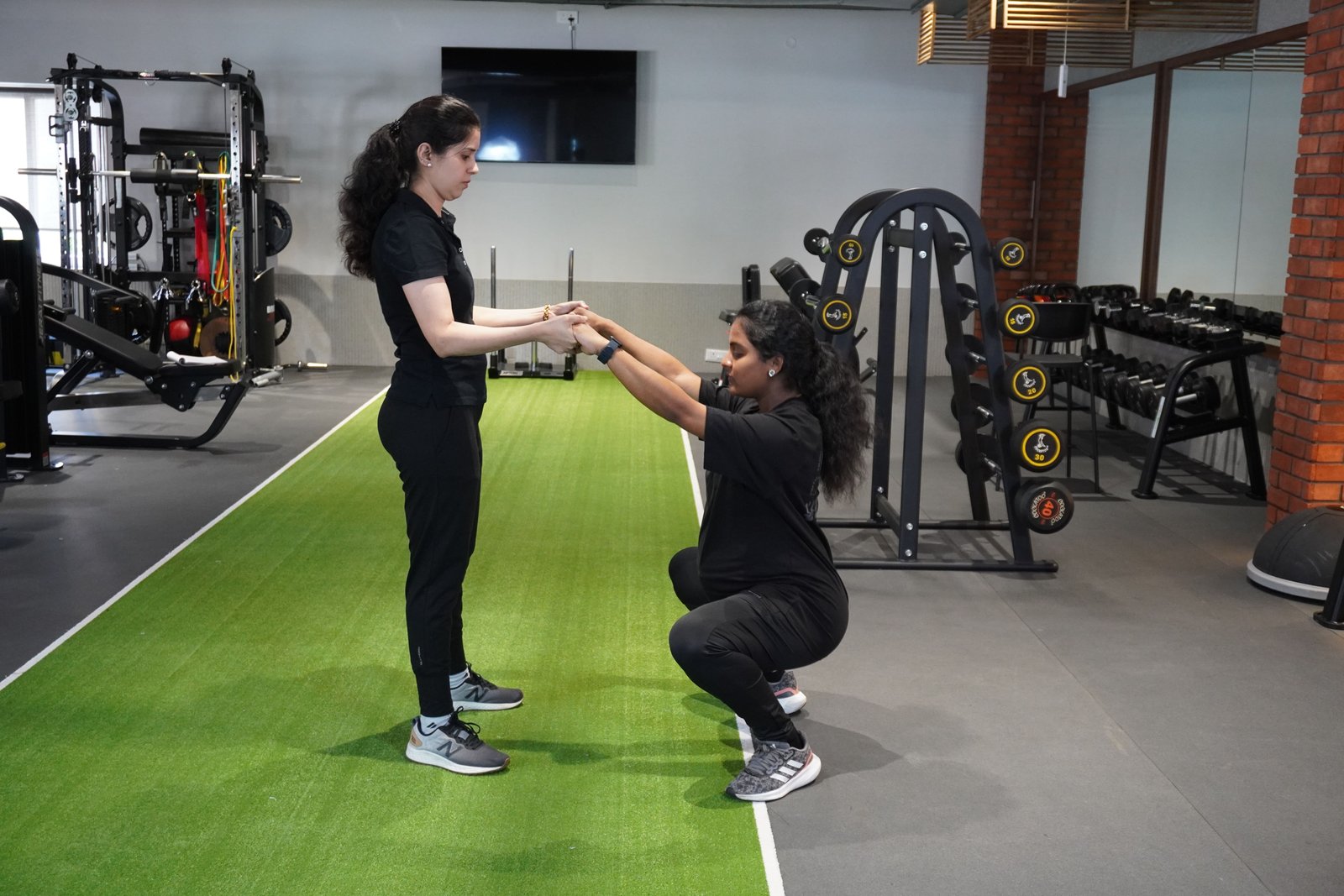
The term “natal” refers to the birth of a baby, so “prenatal/antenatal” are the medical terms for pregnancy, while “postnatal” refers to the post-pregnancy phase.
During the prenatal phase, 1 in 3 women experience low back pain and 1 in 5 experience pelvic girdle pain. These symptoms often occur due to hormonal changes and the ever-increasing weight of your foetus and uterus.
A Gynecological Physiotherapist ensures that you are doing the correct prenatal exercises in a safe manner, in order to maintain a strong lower back and pelvic floor. Treatments include:
- Mobility exercises for the spine
- Connective tissue release of the abdomen, back, hips and pelvis
- Pelvic stability exercises
- Advice on sleeping positions, exercise and movement modification
Postnatal Physiotherapy/Physiotherapy after Childbirth
The immediate weeks after childbirth (“postnatal stage”) are an important time for your body to heal, as it would have undergone many changes during pregnancy. It is also crucial to address any issues that occur in this phase, so as to prevent problems in the future. Childbirth can lead to pelvic floor trauma, perineal tears and pudendal nerve injury (the nerve carrying sensation to your bladder and pelvic floor). Consequently, the pelvic floor can become dysfunctional and one may experience urinary or bowel urgency, incontinence, urinary frequency, incomplete emptying and/or pain during sexual intercourse.
A pelvic floor assessment is important to establish the cause of these symptoms. A Pelvic Floor Therapist can conduct this assessment after the 6-week postnatal gynecological check up. Treatment may include:
- Pelvic floor re-training and exercises in the future.
- Provision of pelvic floor educators/muscle stimulators to improve muscle activation and the power of your pelvic floor contraction
- Internal manual therapy techniques to relax the pelvic floor muscles, including trigger-point release, myo-fascial stretches, scar massage, neural mobilisations
- Myo-fascial release of the connective tissue of the abdomen, hips and pelvis which support the pelvic floor
- Myo-fascial release of the connective tissue of the abdomen, hips and pelvis which support the pelvic floor
- Relaxation and breathing techniques
- Provision of pelvic floor exercises and general exercise to assist in release and re-training of the pelvic muscles
- Provision of vaginal dilators, pelvic floor educators or muscle stimulators to assist in the release and relaxation of pelvic muscles
- Assessment and treatment of any unresolved low back, hip or pelvic pain
Diastasis Recti and Exercise After Pregnancy
After pregnancy, almost all women want to lose weight and get a flat tummy. However, prior to starting any exercise, it is extremely important for the new mother to be thoroughly examined for the condition called “Diastasis Recti” by a Gynecological Physiotherapist. Left unaddressed, it can lead to lower back pain, constipation and urine leaking. In some rare cases, the tissue may tear and form a hernia, too.
Diastasis recti is the partial or complete separation of the rectus abdominis muscle, or the “six-pack” muscles, which meet at the midline of the stomach. There are various types of Diastasis Recti (see image below):
When these muscles get overstretched during pregnancy, they often separate, making it harder for the woman to regain her flat tummy. Therefore, it is advisable for a new mother to be assessed, and if necessary, be treated for diastasis recti, before starting regular abdominal workouts. This assessment can be carried out after approximately six weeks for a vaginal (“normal”) delivery or after eight weeks for a C-section.
Jaya Physio Clinics has a dedicated gym called “Trans-Form PRO”, to ease your pregnancy and also enable faster postnatal recovery. You would have the advantage of exercising under the guidance of a skilled Gynecological Physiotherapist.
Methodology — Your Recovery Journey
Why choose Jaya Physio Clinics for Women’s Health Physiotherapy?
Confidential & Sensitive Care
- Absolute confidentiality and a safe, non-judgmental environment
- Female physiotherapists experienced in intimate health issues
Expert Diagnostic Abilities
- 14+ years experience treating pelvic conditions
- Treated over 10,000 female patients
- Specialist pelvic-floor rehab physiotherapy in Hyderabad
- Rated 4.9★ on Google Reviews
Highly Customised Pain Management
- Comprehensive care from pain relief to performance & function
- Individualised plans based on life-stage & medical history
Treatment Without Medicines or Surgery
- Abdominal & pelvic stimulation, SIS, laser, DTS, shockwave, biofeedback
- Integrated approach: physiotherapy + chiropractics + dry needling where needed
Book Consultation with Women’s Health Expert
Some info & Patient Stories
Physiotherapy for Pregnant Women – Safe, Personalised Care
Google Review Highlights
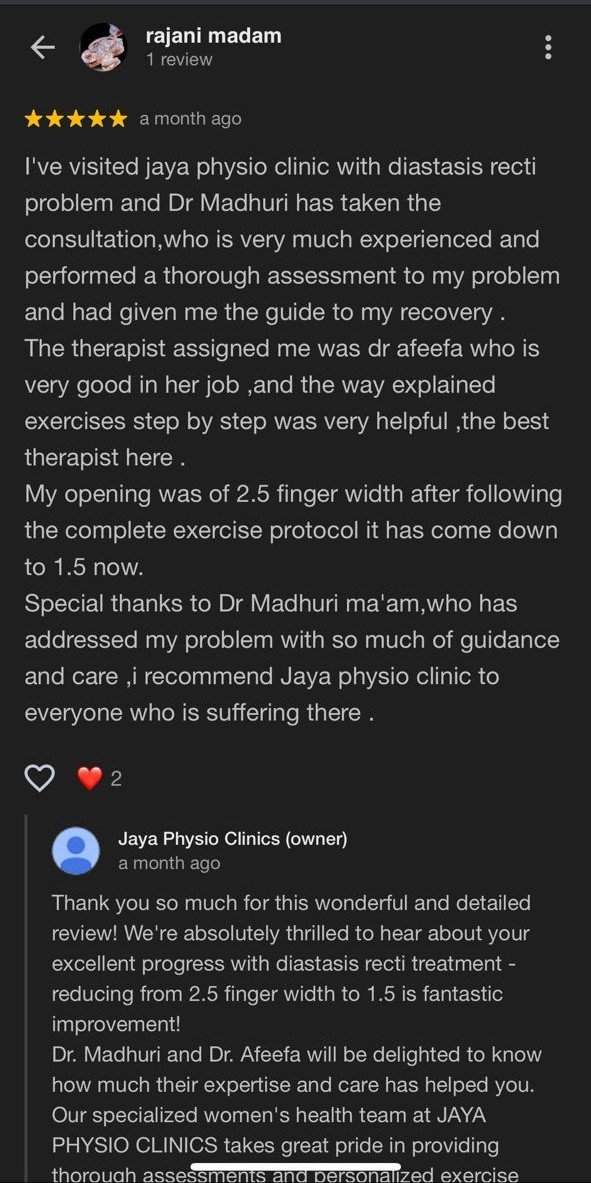
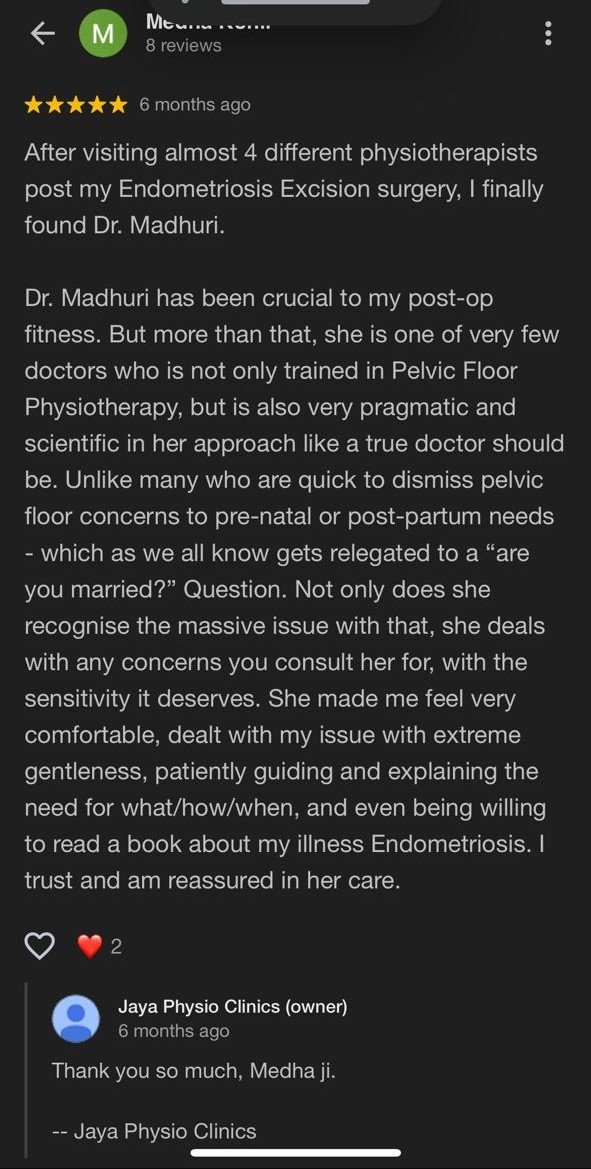
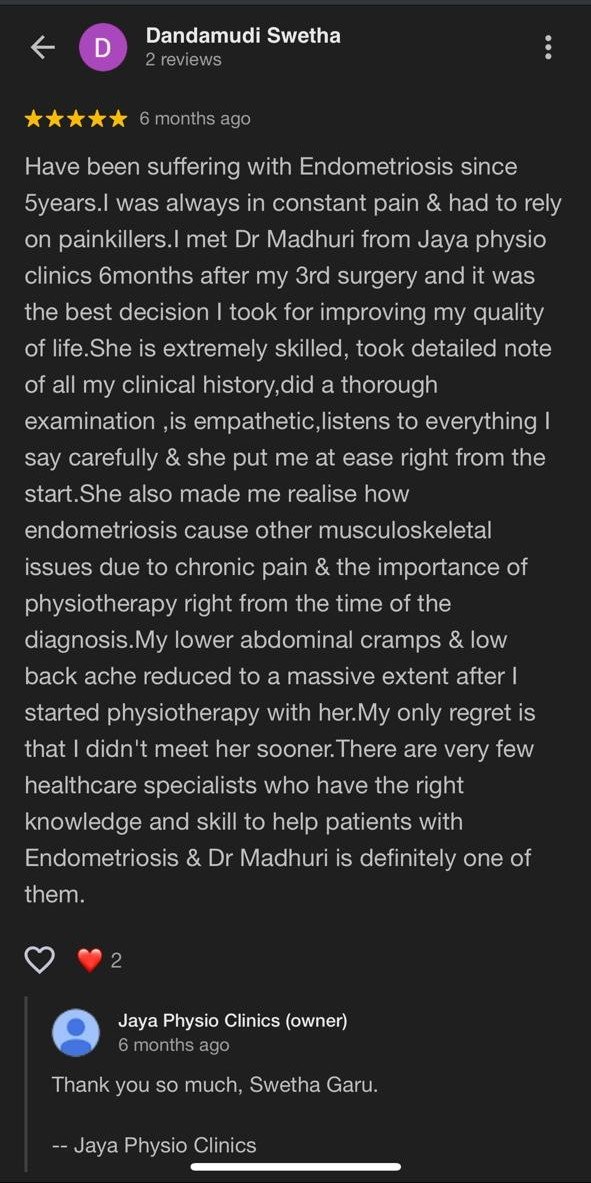
Verified Google Reviews (4.9 ★ average from 900+ patients)
FAQs
-
Do I need to consult a gynaecologist first, or can I come directly to you?
You can come directly after booking at 99635 37999 / 98496 95691. If a condition is outside our scope, we'll guide you to the appropriate specialist.
-
How many sessions will I need and how long is each session?
Depends on condition severity. Typically each session is ~45 minutes. We'll provide a personalised plan after assessment.
-
Is physiotherapy a long-term solution?
Yes — physiotherapy targets root causes to provide sustainable results and prevent recurrence.
-
What are the treatment fees?
Initial consultation fee: Rs. 800. Treatment fees vary by condition and severity; you'll receive a clear estimate after consultation.
-
I prefer a female physiotherapist — is that possible?
Yes — we have experienced female therapists. Please state your preference when booking.
-
Is physiotherapy safe during pregnancy?
Absolutely — when guided by a qualified physiotherapist. We provide pregnancy-safe programs tailored to each stage.
-
Would my information be kept confidential?
Yes. We treat all patient information with the utmost confidentiality and sensitivity.
-
Can stress urinary incontinence be treated?
Yes. Stress urinary incontinence can often be improved with pelvic floor strengthening, biofeedback and progressive rehab delivered by a pelvic floor physiotherapist.
-
How is physiotherapy different from prenatal yoga?
Yoga aids flexibility and relaxation. Physiotherapy is targeted medical care: strengthening core & pelvic floor, improving posture & balance, and providing a safe recovery plan tailored to you.
-
Why train under a physiotherapist after delivery?
Physiotherapy helps close diastasis, manage scar tissue, strengthen pelvic floor & core, and safely guide return to exercise — reducing future injury risk.
-
What should I bring for my first visit?
Please bring medical reports, X-rays, MRI scans and prescriptions related to your condition.
