
Knee pain doesn’t just affect movement — it affects confidence.
It starts subtly: discomfort while climbing stairs, stiffness after sitting too long, or pain during a morning walk.
Over time, that mild irritation can become persistent. Many people then hear a word that immediately raises concern: surgery.
Clinical research shows that a significant percentage of non-traumatic knee pain cases — especially early osteoarthritis and meniscal irritation — can be effectively managed with conservative treatment before surgery is even considered.
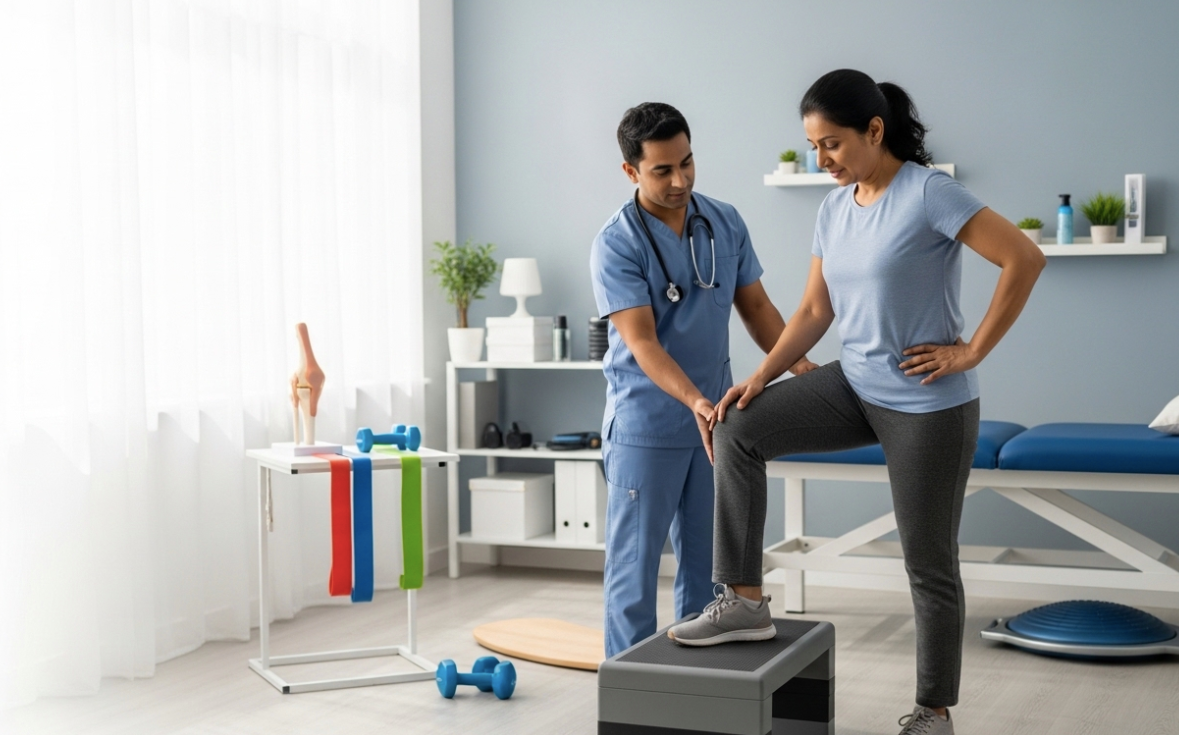
This is where physiotherapy for knee pain plays a crucial role.
Why Knee Pain Develops
The knee is one of the most load-bearing joints in the body. During simple walking, it experiences forces up to 2–3 times your body weight. When climbing stairs, that load increases even further.
Common contributors to knee pain include:
- Weak quadriceps muscles
- Tight hamstrings or calf muscles
- Poor hip strength
- Weight gain
- Repetitive strain from running or gym workouts
- Early cartilage wear (osteoarthritis)
- Poor walking mechanics
Muscle weakness and joint instability are key drivers of pain progression, especially in middle-aged adults.
Importantly, many of these factors are modifiable.
When Is Surgery Truly Necessary?
Surgery is typically reserved for:
- Complete ligament ruptures
- Advanced bone-on-bone arthritis
- Severe joint deformity
- Major traumatic injuries
International orthopedic guidelines recommend structured rehabilitation as the first-line treatment for most degenerative and non-emergency knee conditions.
Comparative research has shown that many patients with meniscal irritation achieve similar improvements through exercise-based therapy as those undergoing arthroscopic procedures.
That doesn’t mean surgery is ineffective — it means it’s not always the first step.
How Physiotherapy for Knee Pain Works
Rather than focusing solely on the painful area, physiotherapy addresses the mechanics that caused the discomfort in the first place.
1. Strengthening the Knee’s Support System
The knee relies heavily on surrounding muscles for stability. When the quadriceps, glutes, and hamstrings are weak, the joint absorbs excessive stress.
Targeted strengthening programs reduce joint load and improve alignment.
Improving quadriceps strength has been shown to significantly reduce pain and improve function in early osteoarthritis patients.
Stronger muscles act as natural shock absorbers.
2. Correcting Movement Patterns
Many knee problems stem from faulty biomechanics.
For example:
- Hip weakness can cause the knee to collapse inward
- Flat feet can alter knee tracking
- Improper squat technique increases joint compression
A physiotherapist evaluates walking patterns, posture, and functional movements to identify these contributors.
Correcting biomechanics reduces repetitive strain and helps prevent worsening degeneration.
3. Restoring Joint Stability
Instability can make the knee feel unreliable, especially during stairs or uneven surfaces.
Balance and proprioception training improve neuromuscular control, helping the joint respond efficiently to load.
Better stability reduces flare-ups and enhances confidence in daily movement.
4. Managing Inflammation Without Overreliance on Medication
Manual therapy, joint mobilization, and guided exercises improve circulation and reduce stiffness.
Unlike medication, which masks symptoms, physiotherapy works toward improving joint mechanics.
This dual approach — pain reduction plus functional correction — supports long-term recovery.
5. Supporting Safe Activity and Weight Management
Excess body weight significantly increases knee stress. Every additional kilogram adds multiple kilograms of force across the joint during walking.
Physiotherapy programs incorporate graded activity plans, allowing patients to return to low-impact exercise safely.
This supports both joint health and overall fitness.
The Emotional Impact of Knee Pain
Beyond physical discomfort, patients often report:
- Fear of climbing stairs
- Avoiding social gatherings
- Reduced participation in exercise
- Interrupted sleep
- Anxiety about joint damage
Structured rehabilitation addresses not just pain — but also confidence in movement.
Why Early Intervention Matters
The longer knee pain persists, the more likely muscle weakness and compensation patterns develop.
Patients who begin rehabilitation early experience better outcomes and slower progression of degenerative changes.
In many cases, timely physiotherapy for knee pain can delay — and sometimes eliminate — the need for surgical intervention.
A Balanced Perspective
Conservative treatment doesn’t mean ignoring the problem. It means giving the body a chance to restore balance through structured strengthening, movement correction, and guided progression.
At Jaya Physio Clinics, knee rehabilitation focuses on:
- Thorough biomechanical assessment
- Progressive muscle strengthening
- Stability retraining
- Movement correction
- Long-term joint protection strategies
The aim is to improve function first — and consider invasive options only if truly necessary.
Final Thoughts
Knee pain can feel alarming, especially when surgery is mentioned. But structured rehabilitation provides significant relief for many individuals.
Before deciding on invasive procedures, understanding the role of physiotherapy for knee pain may open the door to a safer, more sustainable path to recovery.
Your joints are designed to move — and often, with the right support, they can heal stronger than expected.
📍 Jaya Physio Clinics, Madhapur, Hyderabad
📞 +91-99635 37999
🌐 jayaphysioclinics.in
