
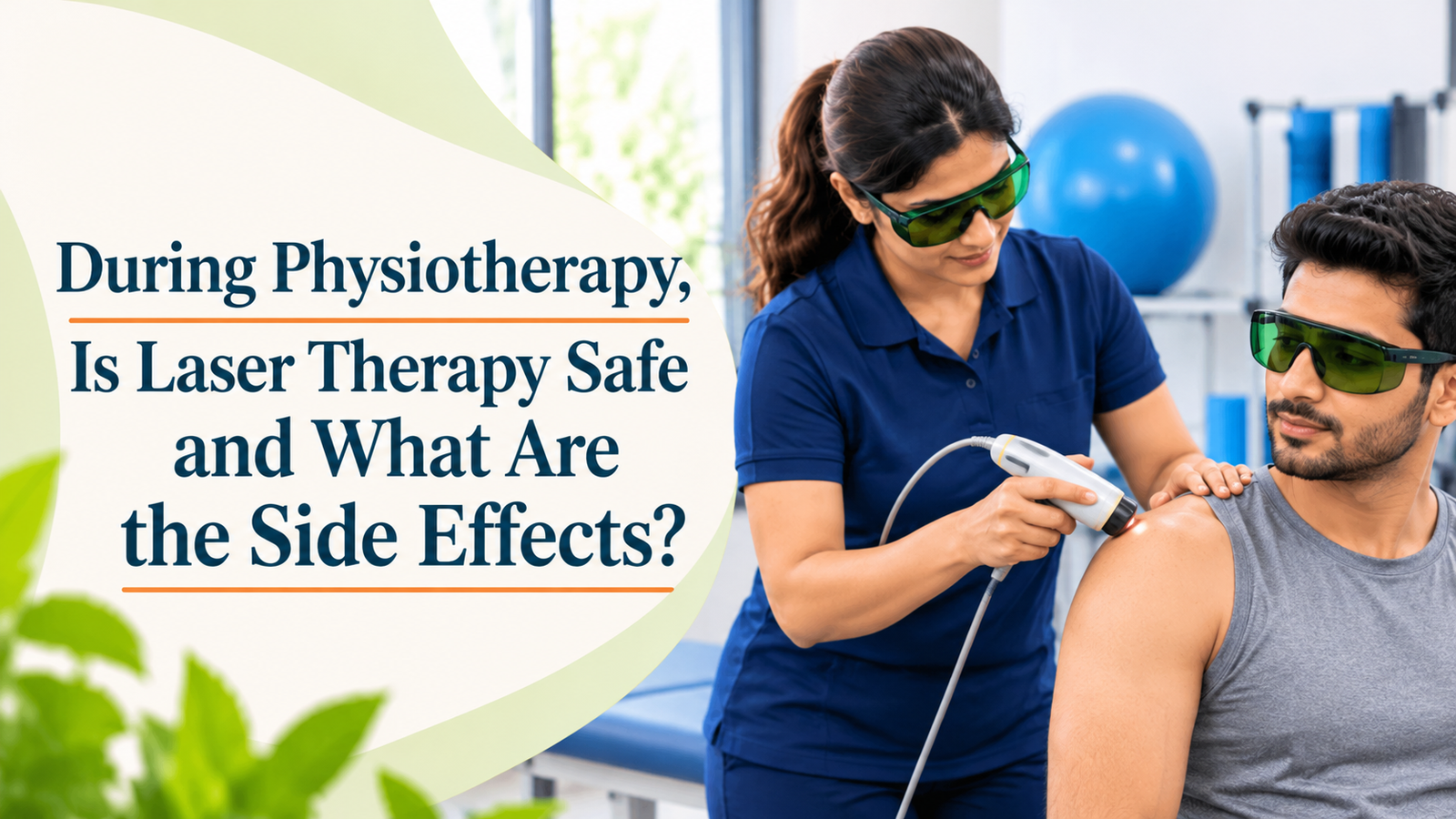
Laser therapy is generally considered safe for most people when administered by a trained practitioner using appropriate medical equipment. It is a non-invasive, drug-free treatment available as low-level laser therapy (LLLT) or high-intensity laser therapy (HILT). Physiotherapists use it to help relieve pain, reduce inflammation and support tissue repair. However, the word laser can raise concerns among patients. Questions about how the treatment feels, possible side effects, who should avoid it and how strong the supporting evidence is are worth understanding before starting treatment.
According to Dr. Kapil Narra, Chief Orthopaedic and Sports Physiotherapist at Jaya Physio Clinics in Hyderabad,“The first thing patients ask is whether it will burn. When the dose is set correctly and we’ve checked your history, it shouldn’t. What I want patients to remember is that laser is an aid. It can lower pain so that you can do the exercises that really fix the problem.”
Considering laser therapy for an injury or chronic pain? Know the possible side effects and precautions before treatment.
Is Laser Therapy Safe in Physiotherapy?
- Non-invasive: Laser therapy does not involve drugs or anything entering the body.
- Types of laser: There are two main categories: low-level lasers and high-intensity lasers, both of which require careful dosing.
- Low risk of side effects: A 2026 study of light therapy for chronic pain found that side effects were rare, although the treatments varied across studies.
- Eye protection: The main safety concern is eye exposure. Both the patient and therapist should wear protective goggles during treatment.
- Trained operator: The correct dose, treatment area and duration are important for safety. These should be determined by a trained physiotherapist.
What Are the Side Effects of Laser Therapy?
Most people experience little to no discomfort during laser therapy. When side effects occur, they are usually mild and short-lived.
- Warmth: A gentle warmth over the treated skin is common, particularly with high-intensity laser therapy.
- Temporary soreness: Some people may notice increased pain for a day or two before it starts to settle.
- Redness: The treated skin may become slightly red during or after the session.
- Skin burns: Rarely, overexposure or increased heat absorption in dark, tattooed or pigmented skin can cause burns. Inform the therapist if the heat becomes uncomfortable.
- Headache or lightheadedness: These are occasionally reported but are usually temporary.
How Laser Therapy is utilized in combination with Physiotherapy?
Laser therapy is not a standalone treatment, and its effectiveness varies across conditions such as knee arthritis, plantar fasciitis and tennis elbow. It is best used alongside rehabilitation exercises. The clinic’s sports injury physiotherapy programme combines both, while strengthening at Trans-Form PRO fitness centre supports recovery and physical function.
After a fall, if the pain is severe or accompanied by weakness, numbness or fever, consult a doctor before starting treatment.
Frequently Asked Questions
1.Does laser therapy hurt?
Usually not. Majority of people experience mild warmth or nothing at all.
2.Does laser treatment involve the same type of radiation, as with X-rays?
No. Laser therapy uses light energy, not the ionising radiation used in X-rays.
3.Is laser therapy able to cause burns to the skin?
It’s rare. Burns typically occur either when the dose is set too high, or when the skin takes on additional heat, so settings are made individually.
4.How Many Sessions Will I Need?
It’s all about the condition as well as your response to treatment. This will be planned following an assessment by your physiotherapist.
References:
- Frontiers in Integrative Neuroscience — Photobiomodulation in Chronic Pain: A Systematic Review of Randomized Clinical Trials: https://pmc.ncbi.nlm.nih.gov/articles/PMC12909510
- Pereira GS et al. — High- and Low-Level Laser Therapy for the Treatment of Orthopedic Pain: A Systematic Review: https://pmc.ncbi.nlm.nih.gov/articles/PMC12958271
Disclaimer: This information is for educational purposes only. Consult a healthcare professional for proper advice and treatment.
