
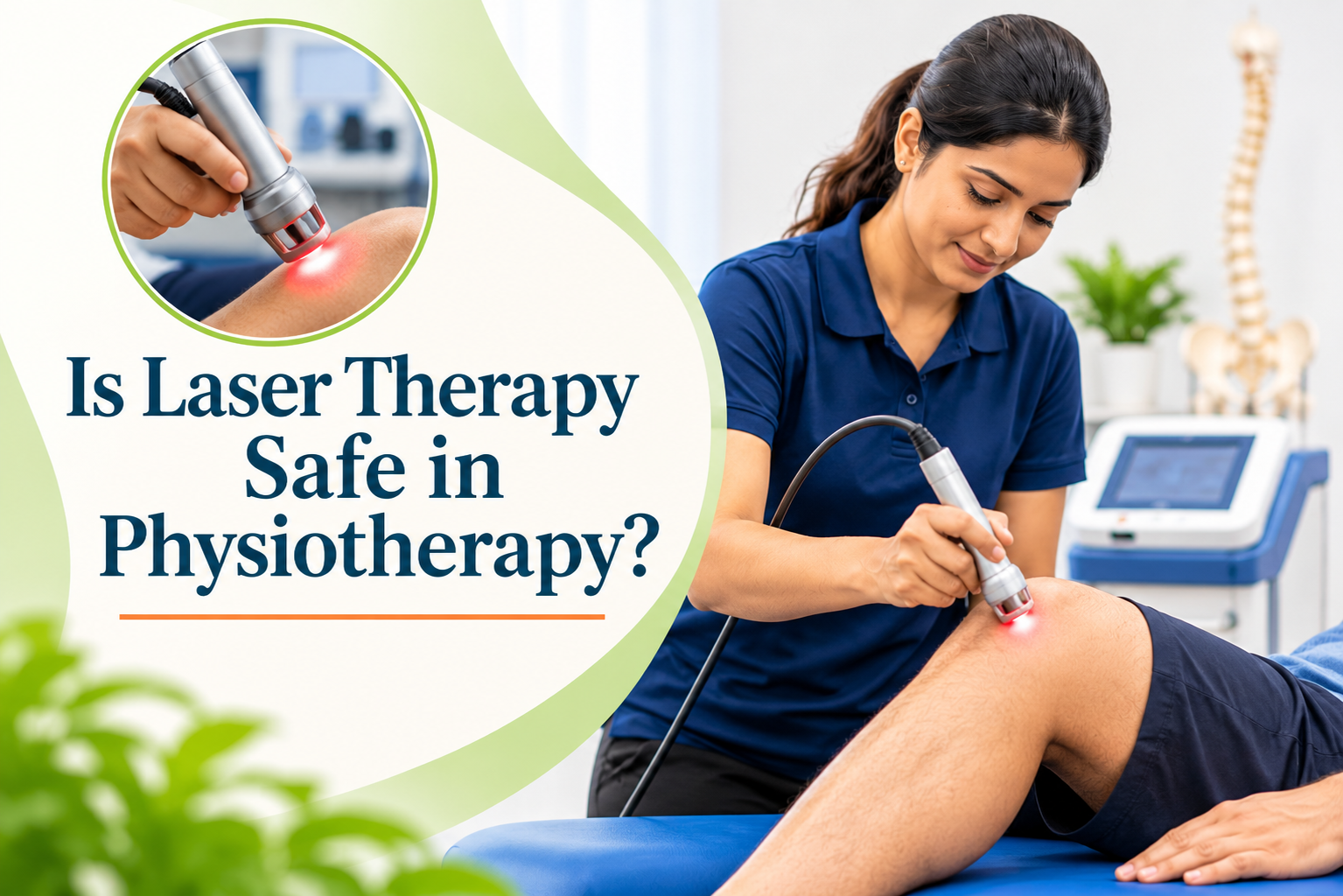
Yes, laser therapy is generally safe for most people when performed by trained physiotherapists. It is a non-invasive treatment and is usually well tolerated. However, its safety depends on the person administering it, the treatment dose and whether the patient’s medical history has been checked beforehand. Since every patient is different, the same treatment may not be suitable for everyone. This article explains how laser therapy works, addresses common concerns and highlights what to consider before starting treatment.
According to Dr. Kapil Narra, Chief Orthopaedic and Sports Physiotherapist at Jaya Physio Clinics in Hyderabad, “People picture a surgical laser, and that’s the wrong image. A therapy laser doesn’t cut or remove anything. What keeps it safe is the assessment before treatment and the dose we choose for your problem, not the machine by itself.”
Considering laser therapy? Know what to expect before your first session.
Why is Laser Therapy safe?
- Not a surgical laser: Therapy lasers are used to alleviate pain and promote healing in the body by transmitting light energy to tissue. They do not cut the skin or involve inserting anything into the body.
- No injections or tablets are used : It is non-invasive and drug-free.
- High-level lasers: The power is different and the dose, the area treated, and time are all set to fit the condition and are controlled.
- Trained operator: A trained physiotherapist selects the settings and observes the reactions of the body and skin.
- Eye protection: The main hazard of a therapy laser is potential eye exposure, so goggles are worn by you and the therapist.
- Low incidence of adverse side effects: An analysis of trials of light-based therapy for chronic pain conducted in 2026 reported that there were few adverse events, although the settings varied significantly from one study to another.
Common Concerns About Laser Therapy Safety:
- Radiation exposure: Therapy lasers use a different type of light and do not work like X-ray radiation.
- Skin burns: Burns are rare and usually occur due to excessive exposure or increased heat absorption in dark skin, tattoos or pigmented areas.
- Effectiveness: Laser therapy does not work for every condition. Research findings are mixed, and one review found no pain benefit for nonspecific low back pain. This is why it is best combined with appropriate exercise and strengthening at Trans-Form PRO, rather than used as a standalone treatment.
What Precautions Can You Take to Ensure Your Treatment Is Safe?
- Choose a qualified professional: Check the therapist’s qualifications and training. Make sure you are treated by a qualified physiotherapist.
- Share your medical history: Inform your therapist about any medical conditions, medications, pregnancy, tattoos or skin problems.
- Understand the treatment: Your therapist should explain why laser therapy is being used, what it may feel like and how many sessions you may need.
- Eye protection and safe setup: Protective eyewear should be provided. Ask for it if it is not available.
- Speak up if uncomfortable: If the area feels too hot or uncomfortable, let your therapist know so the treatment can be stopped or adjusted.
- Follow a complete rehabilitation plan: Laser therapy should be combined with exercises and rehabilitation, such as the clinic’s sports injury physiotherapy and orthopaedic physiotherapy programmes.
Avoid laser therapy over the eyes, abdomen or lower back during pregnancy, and areas with known or suspected cancer.
Frequently Asked Questions
1.Does laser therapy have any contraindications?
Not for everyone. Some medicines pregnancy and known or suspected cancer require careful assessment before treatment.
2.Does a therapy laser equal a surgical laser?
No. A therapy laser doesn’t cut or remove tissue. It transports light energy to the site being treated.
3.Can laser therapy replace exercise?
No. It can alleviate pain, but exercise and rehabilitation remain essential for long-term recovery and strength.
4.What can be done to ensure that a clinic is using laser safely?
A qualified physiotherapist should review your medical history, ensure proper eye protection and follow a treatment plan suited to your condition.
References:
- Frontiers in Integrative Neuroscience — Photobiomodulation in Chronic Pain: A Systematic Review of Randomized Clinical Trials: https://pmc.ncbi.nlm.nih.gov/articles/PMC12909510
- Tomazoni SS et al. — Photobiomodulation Therapy Does Not Decrease Pain and Disability in People with Non-Specific Low Back Pain: A Systematic Review: https://core.ac.uk/download/479092333.pdf
Disclaimer: This information is for educational purposes only. Consult a healthcare professional for proper advice and treatment.
