
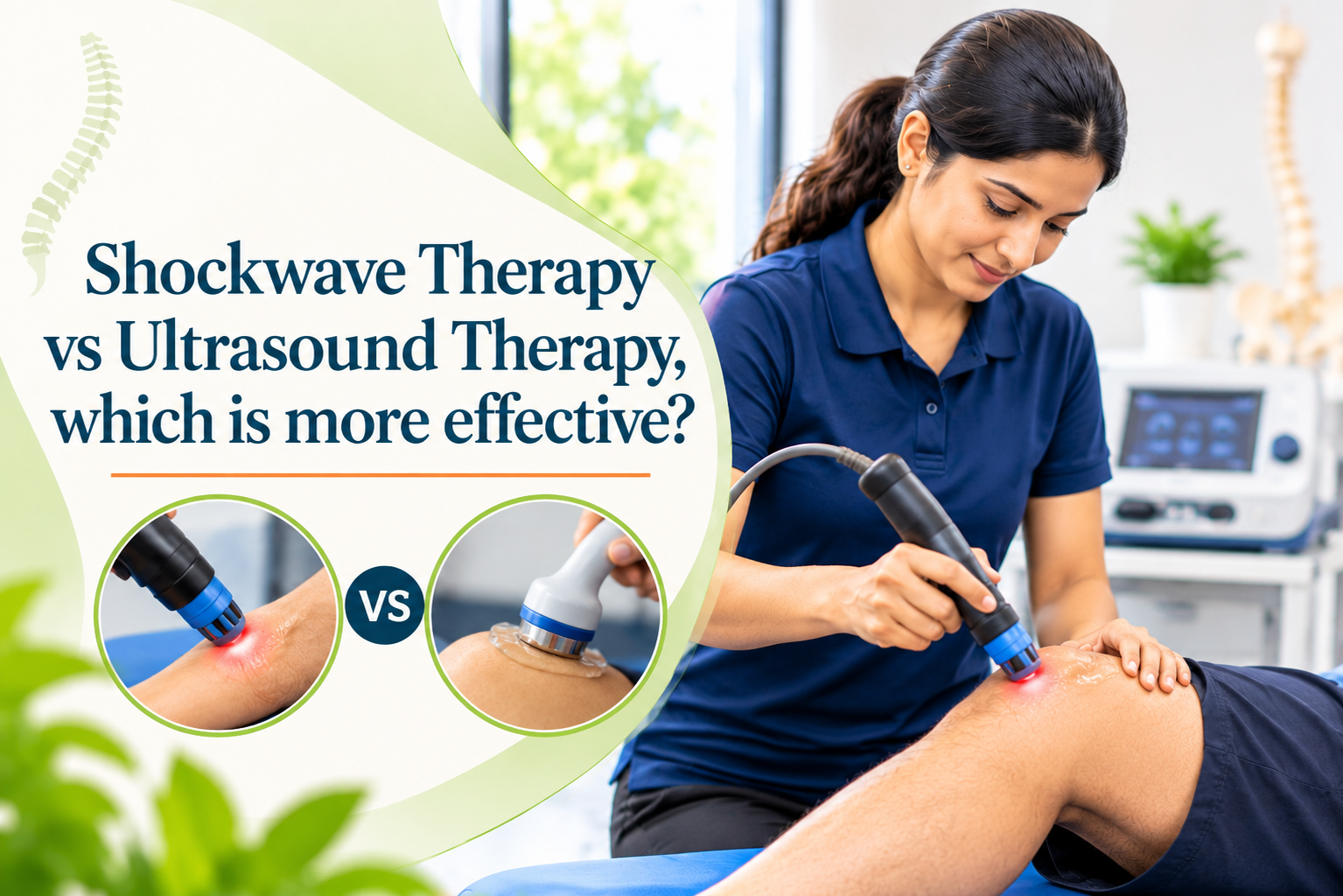
One is not necessarily superior in all circumstances. While shockwave therapy and ultrasound therapy both employ sound-based energy, they rely on completely different principles of operation, they deliver vastly different levels of energy, and the studies conducted on the two therapies are not identical. Shockwave is a strong, focused treatment used mostly for stubborn tendon and heel problems, while ultrasound is a gentler treatment that has been used in physiotherapy for decades. The one that best fits you depends on what is causing your problem, how long you have been having it, and other treatments that you are receiving. Let’s take a look at how they stack up.
According to Dr. Kapil Narra, Chief Orthopaedic and Sports Physiotherapist at Jaya Physio Clinics in Hyderabad,“Patients often ask which machine is stronger, as if stronger means better. It doesn’t. I’d rather start with what the problem is. A stubborn heel and a stiff, achy knee need quite different approaches.”
Unsure which treatment to choose? Understand the differences to make informed decisions.
How Shockwave & Ultrasound Therapy Function?
- Shockwave therapy: Brief pulses of high energy are applied via a handheld applicator to a painful area of calcium build-up, tendon or heel. The purpose is to activate the healing process and relieve pain in unresolved issues. May be uncomfortable when it is being performed.
- Ultrasound therapy: Using high-frequency sound waves to pass through a gel into deeper soft tissue to produce gentle warmth and/or vibration. Not usually painful and used to relieve pain and stiffness.
Shockwave requires a lot more energy, hence it is reserved for certain issues and is set with great care.
- Session style: Both treatments involve short sessions, although their duration and frequency may vary.
Which Conditions Suit Each One?
For calcific shoulder tendon problems, long-standing tendon pain or plantar fasciitis, shockwave therapy is commonly used. A 2023 review reported a large effect on plantar fasciitis and smaller effects on patellar and Achilles tendinopathies compared with exercise.
- Ultrasound: It is used for minor soft tissue pain and stiffness in the muscles. Recent reviews suggest it may help with knee pain, but evidence for shoulder pain remains unclear.
- Fresh injuries: The more gentle options are generally preferred first and shockwave is primarily reserved for persistent, chronic issues.
So Which Is Better?
Chronic tendon or heel pain: Shockwave maybe the better option.
In the case of mild soft tissue pain or knee arthritis, it may be beneficial to use ultrasound as an adjunctive therapy, but the evidence as a whole is less strong.
- Neither replaces exercise: both should be used to help relieve pain and allow exercise and rehabilitation to have a more significant effect. When pain resolves, strengthening exercises can be continued at the Trans-Form PRO fitness centre.
- Safety: Neither is appropriate for all people. Shockwave therapy should be avoided during pregnancy, over suspected tumours, infected areas or the eyes, and in people with bleeding disorders or taking blood thinners.First a full assessment takes place.
The sports injury physiotherapy programme at the clinic involves using shockwave in combination with rehabilitation measures, while orthopaedic physiotherapy deals with joint and bone issues. See our post on modern physiotherapy methods for sports injuries for other treatments in this group.
If pain is severe, has followed a fall, or is accompanied by swelling, numbness or a fever, see a doctor first.
Frequently Asked Questions
1.Does it hurt to receive shock wave therapy?
May be uncomfortable during session and may be slightly sore afterwards. It is well-tolerated by most people.
2.Does therapeutic ultrasound equal an ultrasound scan?
No. The scan creates an image and therapeutic ultrasound provides energy to the tissue to be treated.
3.May I get both treatments?
If necessary, depending on the problem. This will be determined after an assessment by your physiotherapist.
4.Is it enough to do my exercises?
Yes. Both treatments aid rehabilitation, with exercise being most important for long-term recovery.
References
- Charles Retal. — The Effectiveness of Shockwave Therapy on Patellar Tendinopathy, Achilles Tendinopathy, and Plantar Fasciitis: A Systematic Review and Meta-Analysis: https://pmc.ncbi.nlm.nih.gov/articles/PMC10468604/
- Guan Het al. — Ultrasound Therapy for Pain Reduction in Musculoskeletal Disorders: A Systematic Review and Meta-Analysis: https://pmc.ncbi.nlm.nih.gov/articles/PMC11337181/
Disclaimer: This information is for educational purposes only. Consult a healthcare professional for proper advice and treatment.
