
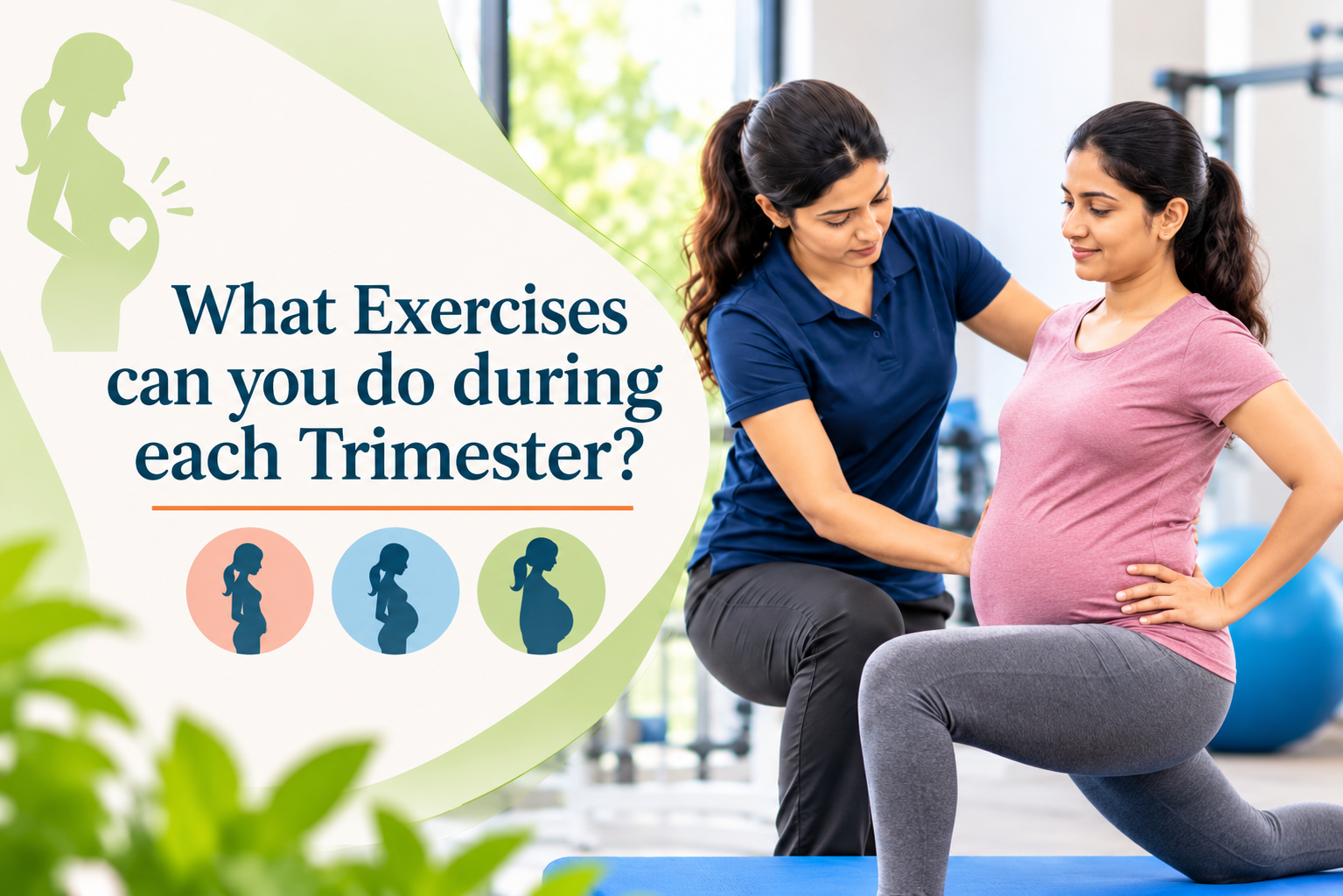
Most women with an uncomplicated pregnancy are encouraged to stay active, but what feels safe can change with each trimester. Walking or swimming may suit one woman at 12 weeks but feel different for another at 34 weeks, depending on her health and medical history. Therefore, speak with your doctor or midwife before starting an exercise routine. Once you have medical approval, this guide covers suitable activities for each trimester and what to avoid.
According to Dr. Kapil Narra, Chief Orthopaedic and Sports Physiotherapist at Jaya Physio Clinics in Hyderabad, “Women often stop exercising completely the moment they see a positive test, or they carry on exactly as before and ignore how their body is changing. Neither helps. The aim is to keep moving and adjust the exercises as the pregnancy changes.”
Unsure which exercises are safe during pregnancy? Find the right exercises for each trimester.
Before You Begin Antenatal Exercises, Here Are Some Things to Keep in Mind:
- Exercise is appropriate: Check with your doctor or midwife before exercising. If you have bleeding, fluid leakage, placenta problems, a weak cervix, high blood pressure during pregnancy or a multiple pregnancy,exercise may need to be restricted.
- How much: For women without medical restrictions, the 2019 Canadian guideline recommends at least 150 minutes of moderate physical activity per week, spread over at least three days.
- How hard: Moderate intensity means you can talk while exercising but cannot sing. You should not be so breathless that you cannot speak.
- When to stop: Stop exercising and contact your doctor if you experience bleeding, fluid leakage, dizziness, chest pain, severe headache, calf pain or swelling, regular painful contractions or reduced baby movements.
Which Exercises Should You Do and Avoid in Each Trimester?
First trimester (weeks 1–12): Walking, swimming, stationary cycling, low-impact aerobics, gentle strength training and pelvic floor exercises are generally suitable. If you feel tired or nauseous, shorter sessions on days when you feel better are perfectly fine.
Second trimester (weeks 13–27): Energy levels may improve, allowing you to continue these activities and include exercises for the back, hips and posture as your centre of gravity changes. Avoid lying flat on your back for long periods and choose activities with a lower risk of falling as your balance changes.
Third trimester (weeks 28–40): Walking, swimming, water exercises, gentle stretching, prenatal yoga, pelvic tilts and supported squats are suitable for many women. Breathing exercises and labour-friendly positions can also help. Shorter exercise sessions are normal at this stage.
The clinic’s women’s health physiotherapy programme focuses on prenatal fitness, pelvic floor exercises and diastasis recti. The Trans-Form PRO fitness centre also offers programmes for expectant mothers.
Which Exercises Should You Avoid During Pregnancy?
- Contact and collision sports: These should be avoided because of the risk of abdominal injury.
- Activities involving fall risks: Horse riding, skiing and outdoor cycling on rough roads carry a higher risk of falls.
- Overheating: Hot yoga, saunas and exercising in very hot conditions should be avoided.
- Breath-holding and heavy lifting: These can increase pressure within the abdomen and pelvic floor.
- Crunches and sit-ups: If your belly bulges along the midline during these exercises, stop and consult a physiotherapist to check for diastasis recti.
- Scuba diving: This is unsafe throughout pregnancy.
For guided exercise sessions without travelling to a clinic, home physiotherapy is another option.
Frequently Asked Questions
1.If I was not physically active before my pregnancy, is it OK to start exercising?
Typically, yes, as directed by your doctor. Start slowly and gradually.
2.Is walking enough?
Walking is good start. Including strength training and pelvic floor exercises completes the exercise routine
3.Is it OK to do abs?
Generally, gentle core activation is okay. Do not do exercises that cause the belly to protrude and seek medical attention if you notice a gap or doming.
4.What intensity of exercise should I do?
Follow the talk test: you should be able to talk comfortably but not sing while exercising.
References:
-
- 1.WHO Guidelines on Physical Activity and Sedentary Behaviour
Includes recommendations for physical activity during pregnancy and postpartum.
WHO – Official Guidelines (PDF) - 2. Staying Healthy and Safe During Pregnancy – Office on Women’s Health (U.S. Government)
Covers safe activities such as walking, swimming and low-impact exercise during pregnancy.
Women’s Health – U.S. Government
- 1.WHO Guidelines on Physical Activity and Sedentary Behaviour
Disclaimer: This information is for educational purposes only. Consult a healthcare professional for proper advice and treatment.
